

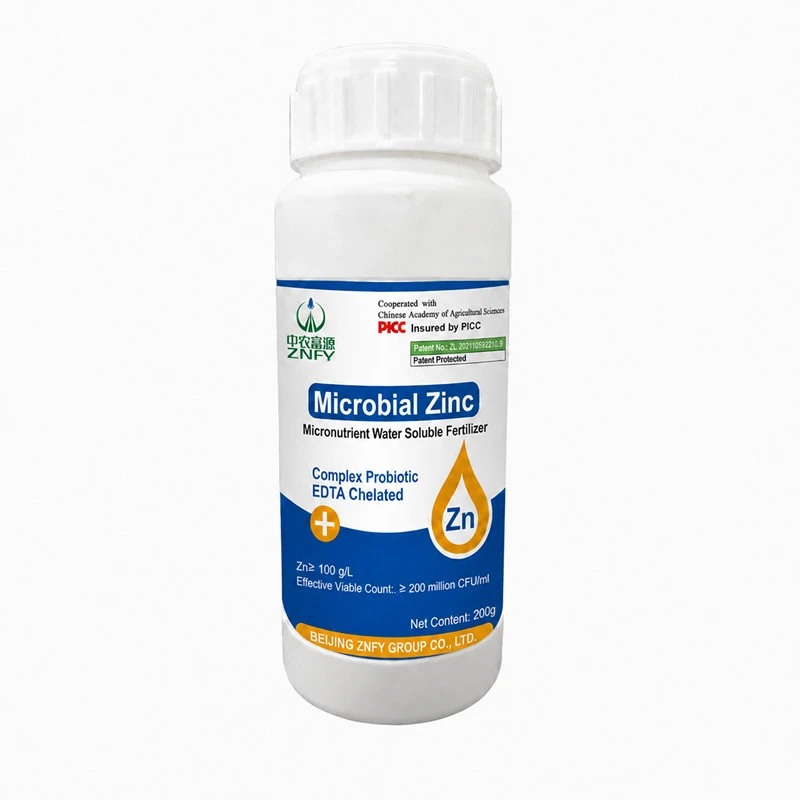


Edta Chelated Zinc Fertilizer
Formulation: Liquild
Package: 200g
Edta Chelated Zinc Fertilizer provides fast-available zinc and beneficial microorganisms to support healthy growth, strong leaves, and balanced crop nutrition.
Product Introduction
Shandong Zhongnong Fuyuan Ecological Agriculture Development Co., Ltd. is one of the leading manufacturers and suppliers of edta chelated zinc fertilizer in China, also supports high quality customized service. If you're going to wholesale bulk advanced edta chelated zinc fertilizer made in China, welcome to get quotation from our factory.
Zinc Microbial Foliar Fertilizer is a concentrated liquid zinc formulation developed for targeted zinc supplementation in crop production. It uses high-quality EDTA-chelated zinc together with several beneficial microbial strains, creating a specialized foliar nutrition solution for crops with zinc deficiency or high zinc demand.
The chelated zinc is designed for efficient foliar uptake, while the biological components complement the zinc nutrition program and support normal plant physiological activity. Regular application can help maintain adequate zinc availability during important growth stages, particularly when crops show typical zinc-deficiency symptoms.
The formulation is especially relevant to crops where zinc deficiency may appear as pale or yellowing leaves, reduced leaf size, shortened plant growth, poor reproductive development, or weak fruit and grain formation. It can be incorporated into crop nutrition programs from the seedling stage through vegetative and pre-flowering periods.
Key Product Highlights
EDTA-Chelated Zinc
Uses EDTA zinc as the primary zinc source to provide a readily available form of zinc for foliar nutrition.
Zinc + Microbial Combination
Integrates zinc supplementation with beneficial microorganisms, giving the formulation a distinctive biological component beyond simple zinc nutrition.
Targeted Zinc Deficiency Management
Designed around common zinc-deficiency symptoms such as yellowing leaves, small leaves, weak plant development, and poor fruit or grain formation.
Broad Crop Relevance
Particularly applicable to cotton, fruit trees, and maize, where zinc deficiency can cause characteristic physiological symptoms and affect crop development.
Product Parameter
|
Item |
Parameter |
|
Beneficial Bacteria |
Bacillus Licheniformis & Bacillus Subtilis |
|
Viable Bacteria Count |
≥200 Billion CFU/g |
|
Zinc (Zn) |
≥100 g/L |
Application

Cotton
Can be incorporated into cotton nutrition programs where zinc deficiency is associated with leaf discoloration, restricted plant development, or premature bud and boll loss.
Fruit Trees
Suitable for managing zinc nutrition in fruit trees showing symptoms such as small leaves, yellowing foliage, weak development, or reduced fruit size.
Corn
Can be used where zinc deficiency is associated with pale seedlings, poor leaf development, uneven growth, or incomplete grain formation.
Directions for Use
- Dilution Rate: 1:1000–2000
- Application Method: Foliar Spray
- Application Timing: Seedling Stage, Vegetative Growth, and Pre-Flowering Stage
- Frequency: 2–3 applications during the growing season
Professional Microbiology Laboratory
Our laboratory is equipped for microbial isolation, screening, cultivation, activity testing, and quality evaluation. Each microbial strain undergoes strict selection and verification procedures to ensure stability, activity, and suitability for agricultural application.

FAQ
Q1: How can I tell if my crops are suffering from zinc deficiency?
A: Common zinc-deficiency symptoms include small leaves, yellow or pale young leaves, shortened internodes, slow growth, weak flowering, poor fruit set, and reduced grain filling. Symptoms often appear first on new growth because zinc is not easily redistributed within the plant.
Q2: Why are young leaves usually affected first by zinc deficiency?
A: Zinc is not easily transported from older tissues to newly developing tissues. As a result, deficiency symptoms commonly appear on young leaves, growing points, and newly formed shoots.
Q3: Why do maize plants develop "white bud" or uneven ear filling under zinc deficiency?
A: Zinc is involved in enzyme activity and plant growth processes. Insufficient zinc may affect normal plant development, resulting in pale seedlings, uneven growth, and reduced grain formation.
Q4: Which fields are more likely to experience zinc deficiency?
A: Zinc deficiency is more common in alkaline soils, calcareous soils, sandy soils, soils with high phosphorus levels, and fields under intensive cultivation.
Hot Tags: edta chelated zinc fertilizer, China edta chelated zinc fertilizer manufacturers, suppliers, factory
You Might Also Like


Send Inquiry
