



Organic Waste Decomposer
Product Type: Microbial Organic Material Fermentation Inoculant
Form: Liquid
Beneficial Microorganisms: Bacillus subtilis, Saccharomyces cerevisiae, Lactobacillus acidophilus
Viable Microbial Count: ≥2 Billion CFU/mL
Main Function: Decomposition and Fermentation of Plant-Based Organic Residues
Suitable Materials: Peanut Cake, Soybean Residue, Rapeseed Cake and Other Oilseed Residues
Product Size: 5 kg
Organic Waste Decomposer is a concentrated liquid microbial inoculant developed for fermenting plant-based agricultural residues into usable organic fertilizer. The formulation combines Bacillus subtilis, Saccharomyces cerevisiae and Lactobacillus acidophilus with a viable count of at least 2 Billion CFU/mL. It is particularly suitable for peanut cake, soybean residue, rapeseed cake and similar materials containing plant protein, cellulose and lignin.
Product Introduction
Shandong Zhongnong Fuyuan Ecological Agriculture Development Co., Ltd. is one of the leading manufacturers and suppliers of organic waste decomposer in China, also supports high quality customized service. If you're going to wholesale bulk advanced organic waste decomposer made in China, welcome to get quotation from our factory.
Agricultural residues contain valuable organic matter and nutrients, but raw materials are not always suitable for direct soil application. Incomplete fermentation may result in unstable organic matter, unpleasant odors or continued decomposition after field application, which can place stress on young roots.
Organic Waste Decomposer introduces a selected microbial population into the fermentation system. Different microorganisms participate in the breakdown and transformation of proteins, cellulose, lignin and other organic components, helping convert complex materials into smaller and more readily available forms.
The liquid formulation is designed for both fermentation tanks and larger fermentation pools. With appropriate moisture, temperature and mixing, it supports a more complete and manageable fermentation process across different operating conditions.

Liquid Decomposition BacteriaManure Fermentation Agent
Main Benefits
The microbial combination can act on several important components of plant residues, including plant proteins, cellulose and lignin.
This makes the product particularly useful for oilseed-processing residues and other materials that normally require fermentation before agricultural reuse.
With ≥2 Billion CFU/mL, the formula provides a concentrated population of active microorganisms at the beginning of the fermentation process.
A strong microbial starting population helps establish fermentation activity more quickly and supports more consistent decomposition of the organic material.
During fermentation, microorganisms break down larger organic compounds and produce smaller nutrient components.
The finished fermented material is therefore easier to incorporate into crop nutrition and soil fertility programs than untreated plant residue.
Raw or incompletely fermented organic residue may continue decomposing after application to the soil. This can create unfavorable conditions around young roots and seedlings.
Proper fermentation before field use helps stabilize the material and reduces the risk associated with applying fresh organic residues directly.
Peanut cake, soybean residue and rapeseed cake still contain significant organic matter after processing.
Instead of treating these materials only as waste, fermentation with Organic Waste Decomposer allows farms and fertilizer producers to convert them into a useful nutrient source for agricultural production.
Properly fermented organic fertilizer supplies organic matter together with fermentation-derived nutrients and microbial components.
Once incorporated into soil-management programs, these materials can contribute to better soil structure, biological activity, root development and nutrient-use efficiency.

PERFECT FOR FERMENTINGOIL SEED CAKE MATERIALS
Turning Oilseed Residues into Fermented Organic Fertilizer
The main use of Organic Waste Decomposer is not simply to accelerate decay. The objective is to create a controlled biological fermentation process that converts agricultural by-products into a more stable fertilizer input.
Oilseed residues such as peanut cake, soybean residue and rapeseed cake contain proteins, fibers and other organic compounds that can become valuable crop nutrients after microbial transformation. The selected Bacillus, yeast and lactic acid bacteria in the formula perform different roles during this process and help maintain active fermentation.
Temperature also influences microbial activity. A fermentation temperature of approximately 30–40°C provides favorable conditions for faster fermentation according to the original product program. Regular mixing can further improve contact between microorganisms and the organic material.
After successful fermentation, the resulting liquid fertilizer should have no strong offensive odor and can be diluted before agricultural use.

POWERFUL BENEFITSFOR BETTER YIELDS & SOILS
Why Choose This Product?
≥2 Billion CFU/mL Viable Microbial Count
Provides a concentrated liquid microbial population for organic-material fermentation.
Three Functional Microbial Groups
Combines Bacillus subtilis, Saccharomyces cerevisiae and Lactobacillus acidophilus.
Works on Different Organic Components
Supports decomposition of plant proteins, cellulose, lignin and other organic matter.
Developed for Oilseed Residue Fermentation
Particularly suitable for peanut cake, soybean residue, rapeseed cake and similar agricultural by-products.
Flexible Fermentation Period
Product dosage can be adjusted according to the required fermentation duration and processing conditions.
Liquid Form for Easy Mixing
The concentrated liquid can be distributed throughout the fermentation material more evenly than many dry inoculation systems.

Professional scientific research team
FAQ
Q: What is Organic Waste Decomposer mainly used for?
A: It is used to ferment and decompose plant-based organic residues so they can be converted into more stable organic fertilizer materials.
Q: Which microorganisms does it contain?
A: The formulation contains Bacillus subtilis, Saccharomyces cerevisiae and Lactobacillus acidophilus.
Q: What is the viable microbial count?
A: The specified viable count is ≥2 Billion CFU/mL.
Q: What materials can be fermented?
A: It is particularly suitable for peanut cake, soybean residue, rapeseed cake and similar oilseed-processing residues.
Q: What does it break down?
A: The microbial combination supports decomposition of plant proteins, cellulose, lignin and other organic compounds.
Q: What temperature is suitable for fermentation?
A: According to the original product guidance, fermentation is most active at approximately 30–40°C.
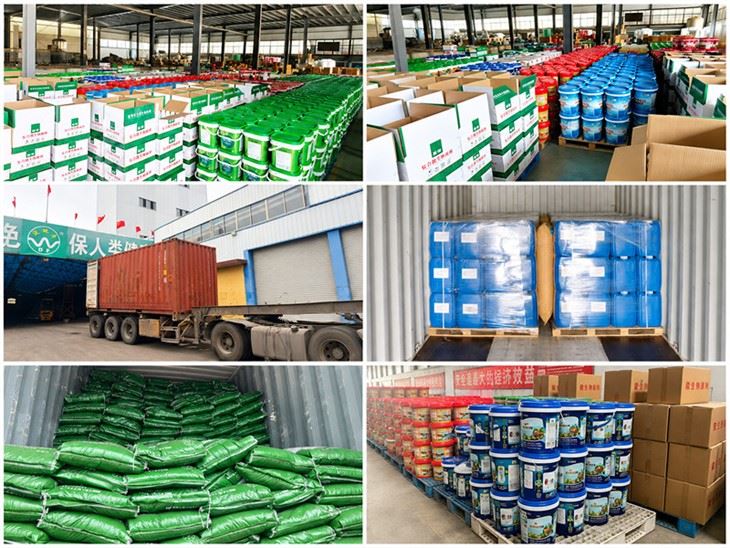
Packing & Shipping

The standard product is supplied as a 5 kg liquid microbial formulation for farms, organic fertilizer producers and agricultural residue-processing projects.
Store in a cool, dry location and keep it separate from strongly acidic or alkaline chemicals. Packaging presentation and local-language labeling can be adapted for distributor or private-label projects.
Hot Tags: organic waste decomposer, China organic waste decomposer manufacturers, suppliers, factory
You Might Also Like


Send Inquiry
